Post Tagged with "Spain"

Picture Postcards: Granizados from Spain

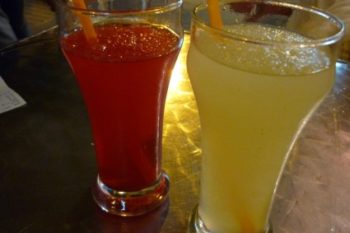
This delicious looking drink photo was sent in by our contributor Marta, from Spain.

She says, “GRANIZADO DE FRESA AND GRANIZADO DE LIMÓN. Ingredients= Strawberry or Lemon juice + water + sugar. (There are many types of granizados, coffee, kiwi, Baileys… you name it!)”

Read more:
Can you learn Spanish in Catalunya?
Five Tips for Raising a Bilingual Child
A Truly Spanglish Couple

November 28, 2011 0 comments

Horchata de Chufa from Spain

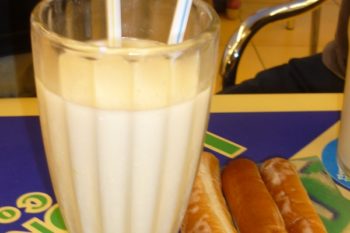
This month on Picture Postcards we are taking a look at non-alcoholic drinks from around the world. Our contributor from Spain, Marta, wanted to share this photo of Horchata de chufa and a little bit of information. She says,

“Horchata de chufa is a refreshing drink from Valencia, Spain. It is made of tigernuts and is served cold during the summer throughout Spain. There is a Regulatory Council that ensures the quality and origin of the chufas with protected designation of origin. If you like almonds, hazelnuts and milk, you’ll probably like it, but it has a very peculiar taste, either you love it or hate it. Horchata can even replace milk for people who are lactose intolerant and its nutritional properties are excellent.”

Sounds good to me!

Read more:
The rain in Spain stays mainly in…
Futbolín: The origins of foosball
School Days Around the World

November 7, 2011 0 comments

Picture Postcards: Graffiti in Granada, Spain

Today’s lovely Picture Postcard was dropped into our Flickr group by Kelly and was snapped in Granada, Spain. Thanks, Kelly!

Graffiti

This month we are extending our look at photos of graffiti and street art. If you have photos to share we’d love to see them – please send them to our Picture Postcards of the World photo group on Flickr.

Read more:
Funny photo from Spain
The rain in Spain stays mainly in…
Always Evolving: Some languages of the world and where they come from

October 3, 2011 2 comments

Hand gestures from around the world

Hand gestures play an essential role in nonverbal communication. However, the same gesture may have different meanings -or even none- in different cultures. This collaborative post is an effort to bridge that gap.

India – Namaste

namaste gesture

Namaste (India)

Namaste literally means “I bow down to you”, or “Salutations to you”, but it is used in the sense a handshake is used in the western world. For us, no matter whether the person we greet is older or younger, important or not, a man or a woman, he/she has to be greeted with due respect, and the most common way is to join our hands as you can see my son doing in the image, and say, “Namaste”.  When we are greeting an older person or someone important, we bow down a bit. This shows the additional respect due to that person. (more…)

September 14, 2011 9 comments

Always evolving: some languages of the world and where they come from

This month’s collaborative post was inspired by a conversation between some of our contributors about languages and how much they ‘borrow’ words from one another. Malay has words from English, Turkish has words from French, English has words from Hindi, Spanish has words from Arabic. Not to mention the massive way in which European languages have influenced each other.

So here’s a look at the history and foreign influences of some of the languages spoken by PocketCultures contributors around the world.

It’s a long article, so if you’re interested in a particular country use these links: India, UK, France, Canada, Turkey, Spain, Argentina, Costa Rica, Portugal, Malaysia.

India: Hindi, English, Tamil, Marathi and many more!

Languages in India are as varied and complex as the country itself. The 2001 census estimated that there were 29 languages spoken by more than a million native speakers, 122 by more than 10,000!

We have 22 ‘official’ regional languages spoken across the country, but no ‘national language’. Hindi is often mistakenly referred to as the ‘national language’, but the constitution lists it as our ‘principal official language’. Where does Hindi come from? Well, it’s a language which evolved from a dialect spoken in northern India during the Mughal period, was influenced by Persian, and is closest to Urdu – the language today identified with Islam!

(more…)

July 15, 2011 9 comments

Naming children: traditions in 13 different countries

How are children’s names chosen in your country? Do you follow ancient naming traditions or are modern names more popular? Do you pass names down through family generations or invent new ones?

We’ve had a lot of fun writing this post and the subject of how children are named in our various countries has inspired a lot of discussion within our team of contributors. So, read on to find out how children’s names are chosen in Argentina, Brazil, Canada, Costa Rica, India, Indonesia, Nigeria, Poland, Portugal, Romania, Spain, Turkey and the USA.

Have something to add? We’d love to hear your thoughts in the comments.

Argentina

By Ana, regional contributor from Argentina.

There aren’t many clear-cut naming traditions in Argentina nowadays. In the past, first-born babies were named after their parents but now the focus is on distinctiveness. Parents choose names they like or that are fashionable. For example, when Argentinean-born Maxima Zorriegueta married Crown Prince Wilhelm-Alexander of the Netherlands, the name Maxima became very popular.

(more…)

April 13, 2011 8 comments