

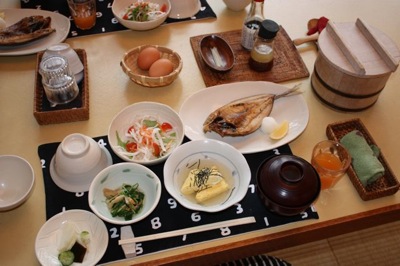
Friday Food of the World: starting this week we will be posting a photo every Friday of food from around the world.
If you have a photo you’d like to share join our photo group on Flickr. We’ll pick a favourite to post every week.
This week’s photo is a Japanese breakfast. How does it compare to your typical breakfast? And if you are from Japan, is this a typical breakfast or do you normally eat other things?
Read more:
Japan rediscovers healthy eating
Fashion freedom in Tokyo
More food of the world photos




Wow, actually if someone has a breakfast like this nowadays, he or she would keep up with good old respectable Japanese diet. :p In other words, we spend less hours in the morning and most of us, I guess, prefer to eat bread, cerial, yogurt, and fruits or we’d rather have nothing other than a jelly styled drink that contains vitamins such as this. http://www.weider-jp.com/weider-in-jelly/index.html
I don’t know exactly what other people eat every morning, but I can guess retired old couples may prefer breakfast like this, while DINKS couples are as above mentioned. Families with kids may prefer egg & sausage with milk besides bread.
One more thing. I can eat this sort of breakfast at a Japanese styled hotel when I travel. Hence to me, it’s a breakfast for people who can have enough time in the morning, very relaxed.
Our life style is so Westernized by now and diet culture is part of that. In that way I believe Japanese people will not outlive as they used to in the past. The key to longevity was what we ate everyday.
Sounds like the title should be ‘traditional Japanese breakfast’ instead then 🙂 What you said sounds like the typical English breakfast of bacon and eggs. Most people would only eat that maybe at the weekend or in a hotel too.
Thanks for putting the link to the vitamin drink – it looks very space age. There is even an alien drinking it in the advertisement!
It seems strange to have fish for breakfast but then kippers used to be a common breakfast in the uk I think.
I often have a bowl of oat porridge for breakfast with pumpkin seeds on top. But I get bored if i eat the same thing everyday so sometimes I have muesli or toast instead. I always think its funny how some people like to eat the same thing for breakfast every single day.
I think i’d get hungry if i just had a vitamin jelly drink though. Does it fill you up Kirin?
It is not unusual for a Japanese breakfast to include vegetables, miso soup, green tea, and a small bowl of brown rice.
Japanese eat a lot of fish, so Traditionally they would most likely have fish for breakfast.
The Japanese diet is one of the healthiest in the world. Of all the modern countries, Japan has the lowest obesity and illness rate, and the longest lifespan. Not to mention, they look younger than thier age and have perfect complexion from all of the healthy rich foods.
What I realy think it comes down to is most people grab what they can and what they like before they head out to work for their day. The traditional breakfast is nice but I usualy only do that on weekends and it’s still not like going to a resteraunt. Besides having meals like that every day can put a real crunch on your grocery budget. It’s nice to see us western people aren’t alone.