Post Tagged with "interviews"

How to Become A Cultural Insider: Remain a Learner

Ron is an American who has been living abroad for over 25 years, currently in Northern India. Ron’s blog, Culture Happens, focuses on helping people to become “cultural insiders”. In Ron’s many experiences living in different cultures, he has observed that although expats moving to another country start out wanting to connect, they often become disillusioned along the way and wind up as “cultural outsiders”. In this interview with Ron, we explore a bit more what a “cultural insider” is, why this distinction is so important and Ron’s advice for those moving to a new culture.

(more…)

July 7, 2011 2 comments

How to Overcome your Shyness

Getutza lives in Campulung Moldovenesc, a small, calm town in a mountain region of Romania. She is a timid person who has discovered that blogging can help her overcome her shyness. Here is her story:

Hello Getutza, thank you for accepting to give this interview to Pocket Cultures. What can you tell our readers about you?

I‘m 48 years old. Some time ago I was pensioned for medical reasons, after I had been working as a chemical operator in the lab of a geological prospecting plant. At present, I live alone in Campulung Moldovenesc. My parents passed away and my brother is living in another town.

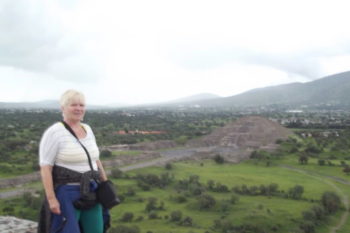
Getutza in the Ciprian Porumbescu museum

(more…)

August 12, 2010 11 comments

A slower pace of life

Sash Milne has achieved something which remains a dream for many – her job as a screenwriter allows her to work from anywhere in the world. She currently lives in Batu Karas, a remote village in Indonesia, and her blog Barefoot Ink is all about slowing down to the pace of life over there, with some travel stories as well.

We asked Sash some questions about life in Indonesia.

How did you end up in Indonesia? And why Batu Karas?

I ended up in Indonesia because I was feeling trapped and a bit uninspired living in a big city in Australia. A friend of mine got a job in Batu Karas and asked me if I’d be interested in moving there with her.

Batu Karas is a tiny village on the south coast of Java – it’s extremely remote; no supermarkets, no shopping, no movie theatres within 8 hours of the village – it sounded perfect. I made my decision quickly and within a few weeks I had packed up my life and boarded a plane to the island. I’d never been to Indonesia before in my life, and it is the best decision I have EVER made!

What’s the biggest difference compared to life in Australia?

The biggest difference in terms of my lifestyle is the speed at which life travels. Life is slow and relaxed in the village whereas in Melbourne life was fast paced and I was forever rushing to get from one event/job/meeting to another. Now, there is nothing to rush for, life goes at a relaxed pace and every day achieving one thing is a massive event – there is little to do so it took a few months to really slow my brain down, but now, I wouldn’t have it any other day. It’s exhausting doing nothing!

Could you describe a typical day?

My typical day starts with a hot cup of tea on the beach around 6.45am accompanied by good conversation and a cigarette with some local friends. Then, depending on the surf we go in the water or I go home to do some work. Around 10 I meet friends for breakfast of eggs or noodles and then it’s time for the beach. In the heat of the afternoon I work (write) under the fan in my bedroom until low tide, which is when I get my longboard and head out into the surf to cap of the end of the day. The evening involves chess, delicious food and bonfires with good friends.

What language do you use to communicate?

We use a combination of Indonesian and English every day. Some of the locals speak very good English (the younger generation) but are very encouraging when you try to speak their language. The villagers communicate with their local language (Sundanese) on a day to day basis – but it is an extremely complicated language and I just can’t seem to get a grasp on it!

Is it difficult to blog from there? Do you have any problems with internet access, electricity…?

It’s not too hard to blog from Batu Karas, I have an internet connection at my home which is very slow, so uploading photos takes some time. It’s all about patience, the electricity goes off often and the internet often struggles – but when you’ve slowed down to a snails pace that’s never much of a worry!

What about the culture and religion?

I love that the village where I live has such a different culture and religion to where I come from. It is something to be celebrated and I feel extremely lucky to have been welcomed so whole heartedly by friends who are very willing to answer any of my questions about their religion, culture and customs so that I can grow to understand what they believe and what it is that is the foundation for their lives.

Intrigued about life in Batu Karas? Check out Sash’s day in pictures, explorations of the surrounding villages or this post on a rare newspaper and a Javanese theatre artist.

All photos in this post courtesy of Sash Milne.

Read more:
Photo tour of West Sumatra, Indonesia
More blogs from Indonesia on Blogs of the World
An Indonesian wedding with a difference

May 27, 2010 2 comments

Interview with Boimah JV Boimah

This is the third in our series of interviews with Liberian bloggers from Ceasefire Liberia blog. Read the full set of interviews here.

Today we are talking to Boimah J.V. Boimah, a Liberian journalist.

Where do you live and what do you do when you aren’t blogging?

I am Boimah J.V. Boimah, a Journalist working with the New Democrat Newspaper as a Reporter and the CeaseFireLiberia as a Chief Blogger. I live in Monrovia, Liberia. I go out in search of stories that are of interest to our listening, reading and viewing public.

Could you tell us something about daily life in Liberia?

Daily life in Liberia, I mean Africa’s oldest republic, is difficult as most families here hardly afford a full meal per day. Reportage about corruption in government is high while many rely on hard labor to make a living as unemployment in the formal sector remains high also.

Our staple food here is rice but most families eat other food like cassava, potatoes etc to complement their food desire.

What do locals think about Charles Taylor and other members of the former government? (this question came from one of our readers on Twitter)

Locals here look at Charles Taylor as a tyrant and the man who orchestrated the destruction of this country and many others in the sub-region. To be just enough only those still loyal to former president Taylor talk good of him.

Do you ever feel personally threatened in Liberia these days? Where do the threats come from?

Yes I have receives a series of threats in recent times from government officials who take displeasure in my journalism works. Recently, I was severely beaten by some group of court officials including jurors for taking a photograph while on duty.

What do you like to do when you have some free time?

All I like doing when I am less busy is to read, eat and rest. Sincerely speaking doing things like too much of socialising here as journalist may be a risk.

What’s important to you?

All that is important to me is my Journalism work.

Read more:
Liberian government promotes investment in Liberia
The full series of interviews with Liberian bloggers

April 9, 2010 0 comments

Interview with Saki Tango Golafale

This is the second in our series of interviews with Liberian bloggers from Ceasefire Liberia blog. Read the rest of the interviews here.

Today we are talking to Saki Tango Golafale, a student at the University of Liberia.

Where do you live and what do you do when you aren’t blogging?

I live in the Wood Camp community of Paynesville city where I have been for almost four years now.

When I am not blogging, I am involved with many things. I work in a chemistry lab at the University of Liberia, am involved with voluntary community actions that center around environmental protection, and in organizing programs for the chemistry association which I head at the University. I lead a small group of young people who are also sensitive to the environmental issues.

Since you have studied a lot, can you tell us something about how education is structured in Liberia? What is the school system like? Is it easy to go to university?

Education is the foundation on which all our social structures depend for nation building. The school system is still struggling from the destruction from the civil war, but hopes are high to get pre-war status. I would refer you to this site for more on the structure and system of education in Liberia.

Going to University in Liberia is getting competetive as more and more people are being encouraged to learn. There are two state run universities and five private universities and colleges. Fees are getting high and infrastructure and manpower capacities are major priorities of most universities.

You’re also a poet. What makes you write? Will you let us publish a bit of your poetry?

Writing, I think is a basic requirement to survival in this literate world, and this should be the business for every educated man. What a man writes is how he thinks or feels. If I think the world is small, I can reduce that into writing, usually poetic writing, telling someone why I think so.

For me, poetry reflects life’s realities. What I go through and how I feel are sometimes reduced into writing especially poetic writing. One of my poems, “Life’s Load” is an example of a real situation I believe every human being encounters. My most recent work titled, “My Poem”, is below:

My Poem

I like to write my poem at night
When quietness rules the world
And then I blend my ideas to fight
An attempt to encourage a word

I like to think before I write
When solitude rules my life
Awake I am with perfect sight
I continue in the strive

As I describe the mobile cloud
I read my poem out loud
With friendly tone
I tell the moon
How I feel so proud

I like to cook my poem with spice
To make it sweet for all
Like palm butter with country rice
My poem is a diet for all

Copyright ©2009 Saki Tango Golafale

Some of my other poems are published on Sea Breeze Liberia.

You moved to Sierra Leone in 1990 to escape the war in Liberia. How was that?

Yes I moved to Sierra Leone in 1990 to escape the civil war in Liberia, but adjusting to new and unfavorable conditions of life was very hard. I was eight years old then, and I was introduced to hard labor for survival. I worked in a diamond mine and also traded goods at some point in time. As a third grade student from Liberia, I could not attend school because I never got used to the learning environment. Life was unbearable as a refugee.

When Sierra Leone was invaded in early 1991, things only became worse as I lost my brother and my aunt in cross-fire. This was painful. My family and I had to come back to rebel held Liberia.

I recently visited Sierra Leone after 18 years and I saw life and peace. Here is a link to my post about the visit on ceasefire Liberia.

Are Liberians religious? What are the main religions?

Liberians are religious and since the war, in which religious institutions played a major role, religious institutions have increased their activities. There are a lot of churches and mosques these days. Christianity is in dominance while traditional beliefs and Islam follow. But Christianity and Islam are the most actively involved religions.

Check back on Friday for the next interview.

Read more:
Liberians changing their world, one story at a time
Interview with Nat Bayjay, manager of Ceasefire Liberia blog
Will the real Liberia please stand up? Ceasefire Liberia on Blogs of the World

April 7, 2010 0 comments

Interview with Nat Bayjay

This is the first in our series of interviews with bloggers from Ceasefire Liberia, previously featured here on Blogs of the World.

First, a quick introduction – where do you live and what do you do when you aren’t blogging?

I’m Nat Bayjay, a proud Liberian by nationality. I live in Monrovia, Liberia. I’m a journalist by profession and I work for the most Liberian-read online news source called FrontPageAfrica. I’m also the blog manager of CeaseFireLiberia.

The second part of the question is difficult to say becuz I spend most of my time on the internet. But when I’m not blogging, I’m making researches on stories to make follow-up and during very less busy time, I watch European soccer matches on TV.

How long have you been managing Ceasefire Liberia? What are your greatest achievements with the site?

I’ve been managing CeaseFire Liberia for one year now. My greatest achievements are helping CeaseFire Liberia to let its many readers know about happenings in Liberia via stories I’ve been writing ranging from politics to social and even human-interest and cultural stories, as well as helping to recruit some bloggers for the site who write voluntarily, tirelessly and committedly for the site.

Is it hard to recruit bloggers for Ceasefire Liberia?

Yes, to some extend it is difficult to recruit bloggers for the site because everyone nowadays wants to be paid or compensated for whatever contribution he/she makes to whatever projects/initiatives. A lot of my colleagues who I try to recruit soon give up as soon as they realize that they won’t get pay or compensation for their works; however, it’s amazing how some of them continue to sacrifice just as I have.

At Ceasefire Liberia you are twelve bloggers in total, but no women. What do you see as the main reasons for that?

[please don't think I am criticising with this question! I know it is something you have worked on]

No, I in no way feel criticized for this question. As a matter of fact, it is very important that you included it.

It is not that no Liberian female is willing to blog. On the contrary, some of them really want to be a part of the exciting blogging world but are experiencing some hindrances like the lack of gadgets (camera, computer, among others) and have little or no access to internet facilities. Domestic internet is not affordable for the average Liberian and commerical internet is not affordable for most except a few who usually take advantage of such at their respective places of work, affiliation, and so on. A few Liberian women continue to express interest.

What do you love about Liberia?

What I really do love about Liberia is its people who are so quick to put the past behind them and move ahead despite a few of them whose actions depict the contrary.

What’s a typical day for you?

A typical day for me is to awake as early as 4:30am to do some reading or work, leave home by 6:30am. In most instances, I drink tea or eat oats or corn-maize meal for breakfast, but there’s nothing specific about the kind of breakfast eaten becuase I sometimes eat twice a day or sometimes thrice.

The rest of the day is spent either blogging, searching for news among others and returning home between 9:30pm to 10:30pm.

What one thing do you want the world to know about Liberia?

One thing the world needs to know about Liberia is about the scars left behind by the 14-years civil war.

Such scars include the tramautic conditions as well as the physical ones. Others which are very important too include the ever-slowing education system of the post-conflict nation and the lack of opportunities for many to pursue higher education due to financial constraints.

Nat is the manager of Ceasefire Liberia blog and also blogs on his personal blogs Natlyn’s blog and Entertainmentlib.

Update: Rising Voices also interviewed Nat about his work with Ceasefire Liberia. Read it here.

Read more:
Liberians changing their world, one story at a time
Blogging in Liberia on Blogs of the World

April 6, 2010 2 comments