Post Tagged with "Europe"

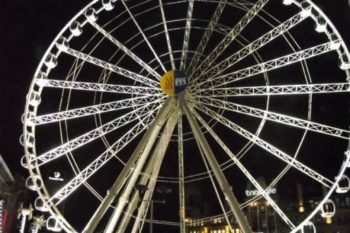
Some things I found strange the first time I went to England

All Italian people love England, especially London: many of my friends tell me that their plan for 2013 is to go there, at least for a weekend or a short period, but definitely all parts of England (and United Kingdom) are a “must go 2013 destination” for someone.

I was lucky to spend 6 months in Manchester for my Exchange (Erasmus) experience, and I must say it was the first time I set foot in England.

Obviously, as a language student, I previously made my research, and I was also obliged -during my secondary school years – to learn by heart not only all the main monuments in London, but also the most important historical events and the main capital cities of the UK.

(more…)

January 23, 2013 1 comment

Tuscany: discover Valdichiana valley

In this post Caterina, our new contributor from Italy, shares some tips for discovering lesser known places in Tuscany and some secrets for getting to know the locals.

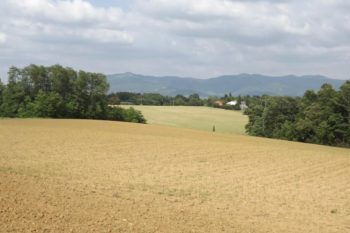
Is this how you think of Tuscany? There is more to discover

Castiglion Fiorentino

If you loved the movie “Under The Tuscan Sun” you will adore the village of Castiglion Fiorentino, a sort of little Cortona but not so well known: its graceful shaped hills, together with its buildings of Etrurian origins, are really unique; why not wander under the Tuscan sun while the perfumes of golden sunflowers tickle your senses? Its romantic paths, shaded by emerald pines, are the perfect set of a romantic walk hand in hand; Castiglion Fiorentino really is a little secret jewel in Tuscany!

But, on the other hand, Castiglion Fiorentino is not just a typical picturesque country village: all the young people in the area would more easily remember its name for the very nice and fashionable pubs (The Garden and the Velvet) than for its typically Tuscan surroundings. Personally, I am also fond of the “Carro Armato” ice-cream: there is no better way of enjoying Italian life than with a gelato in hand.

(more…)

November 2, 2012 6 comments

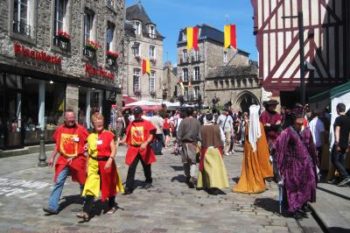
The Fête des Remparts in Dinan – Brittany

The Fête des Remparts is a medieval festival that takes place every other year in Dinan, the home town of Bertrand Duguesclin, one of the most famous medieval characters in French history.

This year’s festival was held on 21-22 July.

Fete des Remparts in Dinan - One is never too young to participate...

It was created in 1983 by the Society of Friends of the Museum and Library of Dinan, with the help of the Tourist Office and the support of the municipality of Dinan.

Fete des Remparts - Place des Merciers in Dinan

The festival has a different theme each time: 2012 was “Réjouissances princières et liesse populaire – Princely festivities and jubilant crowds”.

The theme of the next festival which will take place on 19-20 July 2014 will be “Inventions and Discoveries”.

Fete des Remparts in Dinan - one of the many outstanding costumes seen in the streets

People are encouraged to dress up with medieval costumes for the occasion.

Hiring a costume allows free access to the many shows organized on that weekend such as jousting, medieval markets, open-air dances. The festival ends up with a great parade.

Fete des Remparts in Dinan - a cute little dog...

The Fête des Remparts de Dinan takes the visitors back in time and the century old timber framed houses are a perfect settings for it. We are back in the Middle-Ages.

The spectacle is also in the streets, and it is really difficult to chose the best costume! I let you judge…


Read more

April Frost and Three Saints known as Lune Rousse and Saints de Glace in France

Summer Solstice celebrations in France

About French Wooden Clogs


August 17, 2012 2 comments

About French wooden clogs

The origin of the word French Sabot that means Clog goes back to the 12th century and would be the combination of the words Savate (from the Arabic Sabbat for shoe) and bot (feminization of boot) as it applied to a ankle length shoe.
The images I have selected to illustrate this post are of Dutch wooden clogs because I find them so beautiful! Hope you will too.


Painted wooden clogs

Painted wooden clogs

The use of clogs spread like wildfire in the late 15th-early 16th century especially in the eastern, northern and western parts of France.

Shoes were then commonly called sabottes.

The making of wooden clogs

The making of wooden clogs

Clogs were worn by the rural populations for practical and obviously economic reasons as leather shoes were very expensive and could not be worn for working on the farm.

Clogs were traditionally made from birch, willow, beech or poplar, soft woods that are easy to work but are also very resistant.

The making of wooden clogs

The making of wooden clogs

Once finished the clog was left to dry for several weeks before being put for sale.

Clogs were always a size larger than the foot to allow for straw and later thick woolen socks to keep feet dry and warm.

The making of wooden clogs

The making of wooden clogs: clogs are now left to dry before being put for sale

Farmers wore wooden clogs about until the mid 20th century when cheaper materials came up on the market and allowed for large scale manufacture.

Wearing clogs has never really stopped but they are now found in various forms and colours…  and in plastic.

The clogs are finished and in the shop!

The clogs are finished and in the shop!

Fortunately there is a very clear return to traditional products and wooden clogs are becoming fashionable.

The French seem to follow the example of the Dutch that produce wonderful painted wooden clogs that could almost be considered works of art. Unfortunately French clogs were not painted and were more considered for their practical use than their aesthetic.


Painted wooden clogs

A selection of painted wooden clogs...which one to choose?!

Reminder: the images I have selected to illustrate this post are of Dutch wooden clogs because I find them so beautiful!

Read more

Laguiole, a prestigious folding knife

Aligot of Aubrac

Summer Solstice celebrations in France

July 11, 2012 5 comments

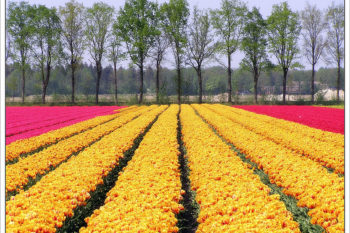
Spring in the Netherlands: the tulip mania, old and new

Finally, it is spring in the Netherlands. The trees are in bloom, lambs are being born as we speak and those born in the past week are already gambolling in the meadows; people are out enjoying walks, riding their bikes or filling the café terraces in the cities.

Tulip field in the Northeast Polder in Flevoland (The Netherlands)

(more…)

April 19, 2012 6 comments

Wind energy industry in France

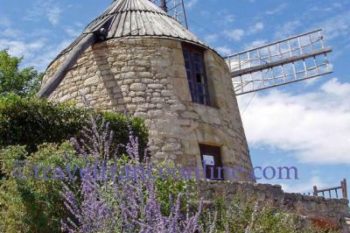
Long gone is the time when farmers used windmills to grind their grain and pump water.  They certainly didn’t know they could use the power of wind to generate electricity for the whole country. Many of the disused mills that have not been left to fall to ruins have been converted into houses, a fun way of protecting them and finding them a new lease of life.

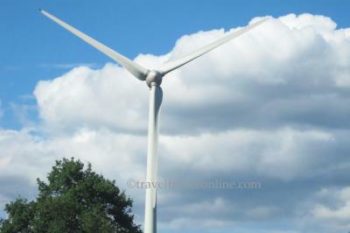
Traditional windmills have been replaced by wind turbines to produce electricity by using wind which is a clean source of renewable energy!

Wind turbine

The cherry on the cake is that wind is free! The only cost, and I know it is quite significant, is the erection of the turbines, but it is a medium term investment that is good for our planet!

Wind energy industry is in full expansion in France and you will notice more and more turbines as you travel through the country. Many ridges and hilltops or windy flat areas are crowned with turbines as municipalities invest for the future as they get tax reduction for doing so.

For example the Midi-Pyrénées Region and especially the Aveyron (south of France) have invested in renewable energy and already produce about 5% of national energy; this places the wind turbine production in 3rd place after nuclear and hydroelectric production.

The Aveyron windmill farm produces about 50MW and is currently the largest windmill farm in France.

Wind turbine installed in a flat but windy area

Wind turbine installed in a flat but windy area

French wind farming is run by Electricité de France and is rated third in Europe after Germany and the UK.

We have grown used to the turbines’ gigantic white silhouettes and I find that they often blend into their surroundings or at least don’t deface the landscape as long as they are not too many of them.

The last thing we want is hundreds of them lined up on our hills despite the fact that mass production considerably reduces the running costs; and wind farming has got many detractors as you can imagine!

They think that turbines are ugly and noisy and are a threat to the environment and wide life as many birds get caught in their blades. I agree with this but have to point out that electric cables have exactly the same disastrous effects.

I am neither in favour nor against wind farming; I just think that it is a brilliant concept as long as it is developed under strict control and respect the environment and the beauty of the landscape as France is the number one tourist destination.

The downside of wind farming, though, is that you need wind… and sometimes there is none!


Read more

Windmills in France

 The secret of Iceland’s free electricity

How to reduce emissions without cutting growth

April 13, 2012 0 comments